
2026-07-12 · 10 min read
Calculation is a discipline, not a one-off project
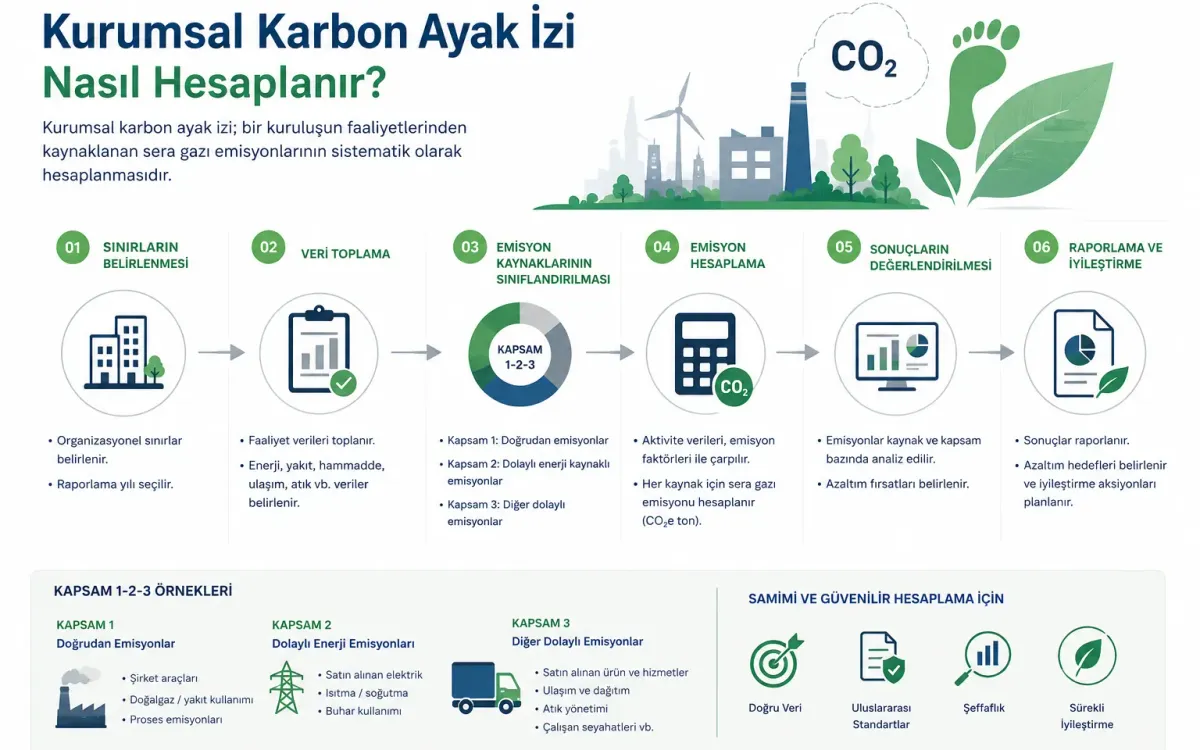
A solid carbon inventory becomes repeatable each year through boundaries, data owners, factor sources and internal controls. The sequence below works for most organisations.
Step 1 — Purpose and organisational boundary
Who is the report for—customers, TSRS/GRI, internal targets? That drives the control approach (operational / financial) and which sites are included.
- Write the reporting purpose and audience
- Clarify sites, subsidiaries and lease boundaries
- Fix the base year and reporting period
Step 2 — Collect Scope 1 and 2 data
Direct fuels, process emissions and purchased electricity/heat form the backbone of most inventories. Meter, invoice and unit consistency are critical.
- List fuel, fugitive and process sources
- Collect electricity / heat invoices with units and periods
- Document missing months and estimation methods
Step 3 — Scope 3 screening and prioritisation
You cannot collect all 15 categories at once. Screen high-impact areas such as materials, logistics and business travel first, then deepen selected categories.
- Flag relevant Scope 3 categories
- Run a rough screen with spend or activity data
- Build a data plan for priority categories
Step 4 — Calculation, quality and report
CO₂e is calculated with appropriate emission factors; uncertainty, recalculation policy and internal review notes belong in the report.
- Record factor source and year
- Prepare an ISO 14064-1 aligned inventory summary
- Build an evidence folder for verification or customer audits
Step 5 — Reduction roadmap
Measurement alone is not enough. Attach actionable targets for energy efficiency, fuel switch, procurement and supplier engagement.
How does KITA help?
KITA runs boundary design, data discipline, ISO 14064-1 reporting and a reduction roadmap as one programme linked to operations.