
2026-07-10 · 9 min read
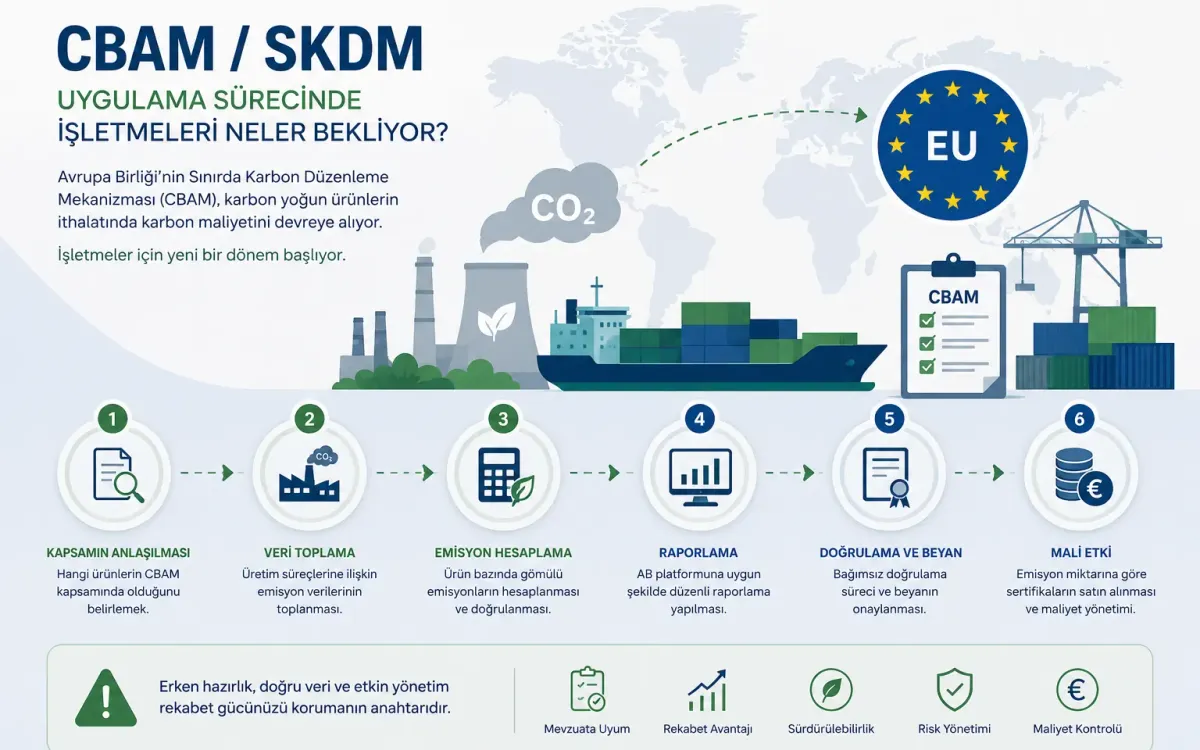
Why a checklist?
CBAM is not one team filling a form—it requires sales, production, procurement and sustainability teams to share the same data language. A checklist makes who collects what, and by when, visible.
1) Clarify product and shipment scope
First, confirm which CN codes and shipments fall under CBAM. Without a portfolio map, emissions work can be wasted.
- Map EU-bound products to CN codes
- Verify installation / producer origin data
- Collect annual volumes and shipment frequency
- Document out-of-scope items in writing
2) Close embedded-emissions data gaps
Decide upfront which measurements, factors and assumptions will be used for direct and indirect embedded emissions. Default values can create cost and risk.
- Bring Scope 1–2 data down to product level
- Record required emission factors and sources
- Keep data-quality / uncertainty notes
- Define verification or internal control points
3) Embed supplier data requests
If supply-chain data is late, the declaration is late. Without a standard request template, contract clause and process owner, the flow is fragile.
- Prepare a supplier briefing note and data form
- Prioritise critical suppliers
- Define response SLAs and escalation
- Write rules for using defaults when data is missing
4) Declaration, archive and cost visibility
In the definitive period, annual declarations, certificates and penalty-risk management need a steady calendar. In parallel, carbon cost must speak to sales and pricing.
- Clarify the internal approval and sign-off chain
- Keep reports and evidence in one archive
- Model cost scenarios (price × volume)
- Assign a process owner and backup
How does KITA help?
KITA builds CBAM readiness together with scope analysis, emissions data discipline and supplier process design. The goal is a repeatable compliance backbone.