
2026-03-12 · 8 min read
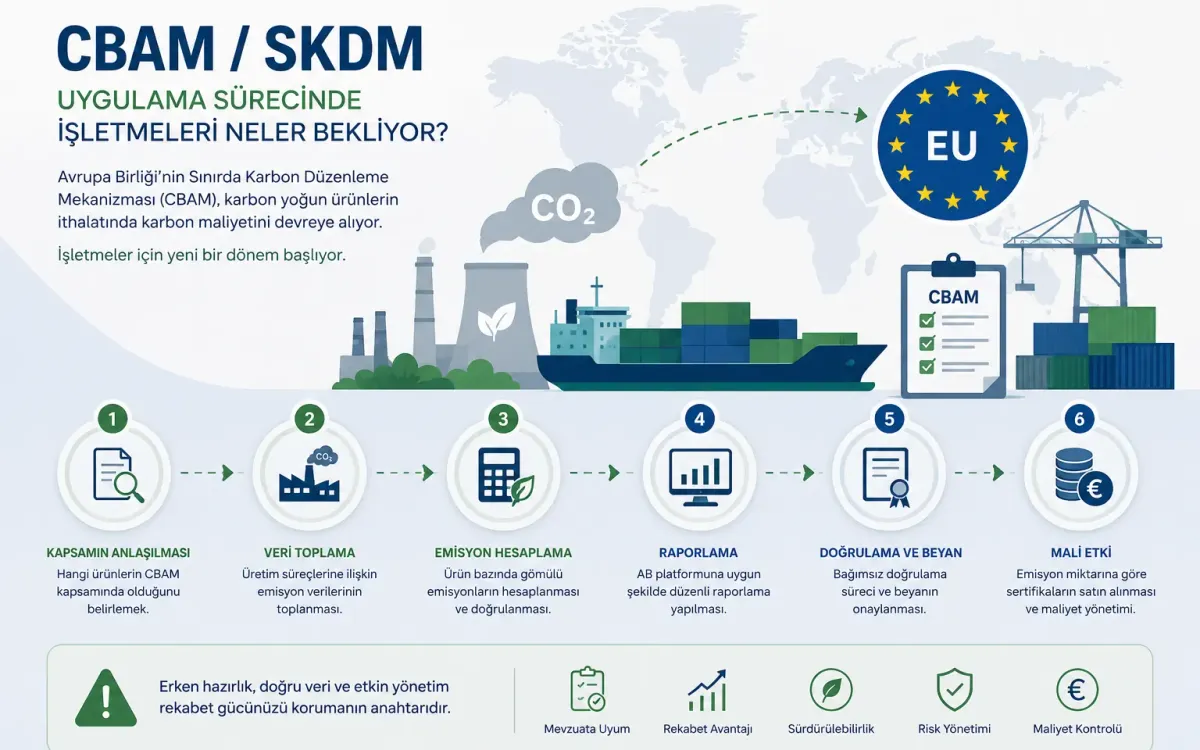
What is CBAM / SKDM?
CBAM (Carbon Border Adjustment Mechanism) is a border carbon measure that prices embedded greenhouse gas emissions in certain goods imported into the EU. In Türkiye it is also often called SKDM. The aim is to level the carbon price gap with imports and reduce carbon leakage.
Who is affected?
Producers exporting to the EU in priority sectors (such as cement, iron and steel, aluminium, fertilisers, electricity and hydrogen) and actors in the import chain should follow the process closely. Because product coverage and transition timelines can be updated, clarifying which SKUs are affected is the first step.
What should companies expect?
CBAM is not just “filling in a form.” Operationally, these themes stand out:
- Collecting and documenting product-level emission data
- Managing supplier data, assumptions and default-value risk
- Reporting calendar, responsibilities and internal approval flows
- Cost impact: carbon price, data collection and process cost
How should companies prepare?
Solid preparation joins the corporate carbon inventory with product/shipment data under one discipline. Without clear boundaries, emission factors and accountable teams, CBAM reports create both operational and commercial risk.
- Map the affected product and shipment portfolio
- Bring Scope 1-2 (and Scope 3 where needed) data down to product level
- Set up supplier briefing and data-request processes
- Embed reporting, control and archiving routines in the organization
How does KITA help?
KITA approaches CBAM readiness together with carbon inventory, data discipline and process design. The goal is not a one-off report, but a repeatable, auditable and cost-manageable compliance backbone.