
2026-02-18 · 8 min read
What is a corporate carbon footprint?
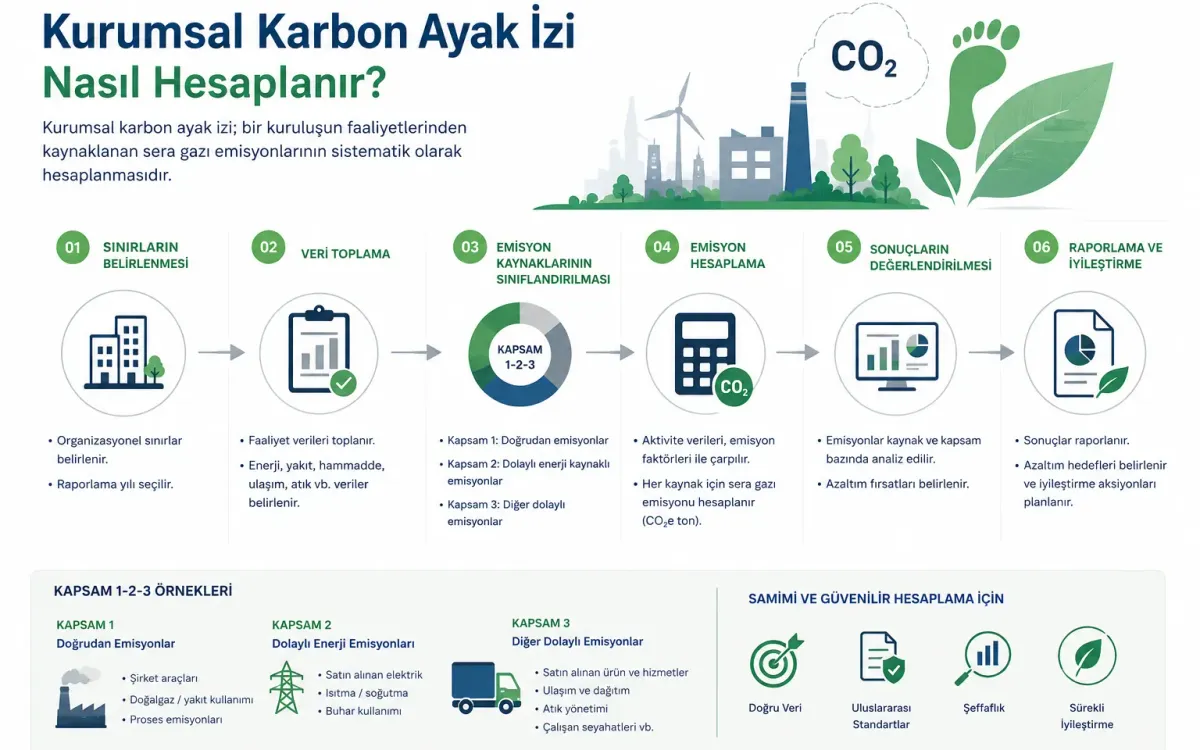
A corporate carbon footprint is the total greenhouse gas emissions from an organization’s activities, expressed as CO₂ equivalent (CO₂e). It covers operations, energy, transport, supply chain and waste, and is the shared foundation for measurement, reporting and reduction.
How are Scopes 1, 2 and 3 separated?
Without correct classification the inventory is not comparable and does not hold up in audits. The three scopes separate emissions by source:
- Scope 1: direct sources such as fuel combustion, process emissions and company vehicles
- Scope 2: indirect emissions from purchased electricity, heat and steam
- Scope 3: value-chain emissions such as procurement, logistics, business travel, waste and product use
What are the calculation steps?
In practice, calculation is not a one-off spreadsheet exercise—it is a repeatable process. A typical flow looks like this:
- Define organizational and operational boundaries
- List emission sources and assign them to scopes
- Collect activity data (energy, fuel, distance, quantities, etc.)
- Calculate CO₂e with appropriate emission factors
- Document the inventory, review it and prepare for verification if needed
Why does data quality matter?
Missing invoices, estimated consumption or outdated emission factors inflate or understate the result. Especially in Scope 3, weak supplier data can make an inventory look “complete” while it cannot support decisions. Source, unit, period and assumptions must be recorded clearly.
How does it connect to reduction and reporting?
A reliable inventory is the shared backbone for CBAM, customer questionnaires, ESG reports and science-based targets. After calculation, you need to identify hotspots and link them to reduction priorities, monitoring indicators and, where needed, ISO 14064-1 aligned reporting.